
How often should it be serviced?
There is no law that says when a geyser or a gate motor must be serviced. The intervals below come from manufacturers' instructions, from the conditions most warranties attach, and from what dust, hard water and the weather do to equipment in South Africa. Treat them as a sensible default and check the document that came with your unit.
The short answer
Six units, and when each is usually due
Pick yours for what decides the interval, what a service covers and what to watch in between.
Electric geyser and heat pump
Every year
Anode check: every 2 to 3 years
The detailSolar PV, inverter and battery
Every year
Panel cleaning: when the yield drops
The detailGate and garage motor
Every year
Backup battery: replace at 2 to 3 years
The detailAir conditioning
Every year
Filters: every 1 to 3 months
The detailPool pump and filter
Each season
Filter media: every 3 to 5 years
The detailBorehole pump and pressure system
Every year
Water test: at least yearly
The detailYour manufacturer's instructions and your warranty conditions win over anything here. Where a warranty requires proof of servicing, an undocumented service is the same as no service at all, which is the part that costs people money.
Electric geyser and heat pump
- Full service
- Every year
- Anode check
- Every 2 to 3 years
What decides it
Water quality. Hard or aggressive water eats a sacrificial anode in a fraction of the time soft water does, and an anode that is gone is a cylinder corroding.
Between services
Watch the overflow. A tray that drips occasionally when the geyser heats is normal; one that runs is not, and a valve that has stopped sealing is the cheapest fault on this page to fix and one of the most expensive to ignore.
What a service covers
- Temperature and pressure safety valve, lifted and reseated
- Vacuum breakers on the hot and cold sides
- The sacrificial anode, inspected and replaced when it is spent
- Drip tray and overflow, clear and discharging where it should
- Thermostat setting and element condition
Most cylinders last eight to fifteen years. The ones that reach fifteen are the ones whose anode was replaced.
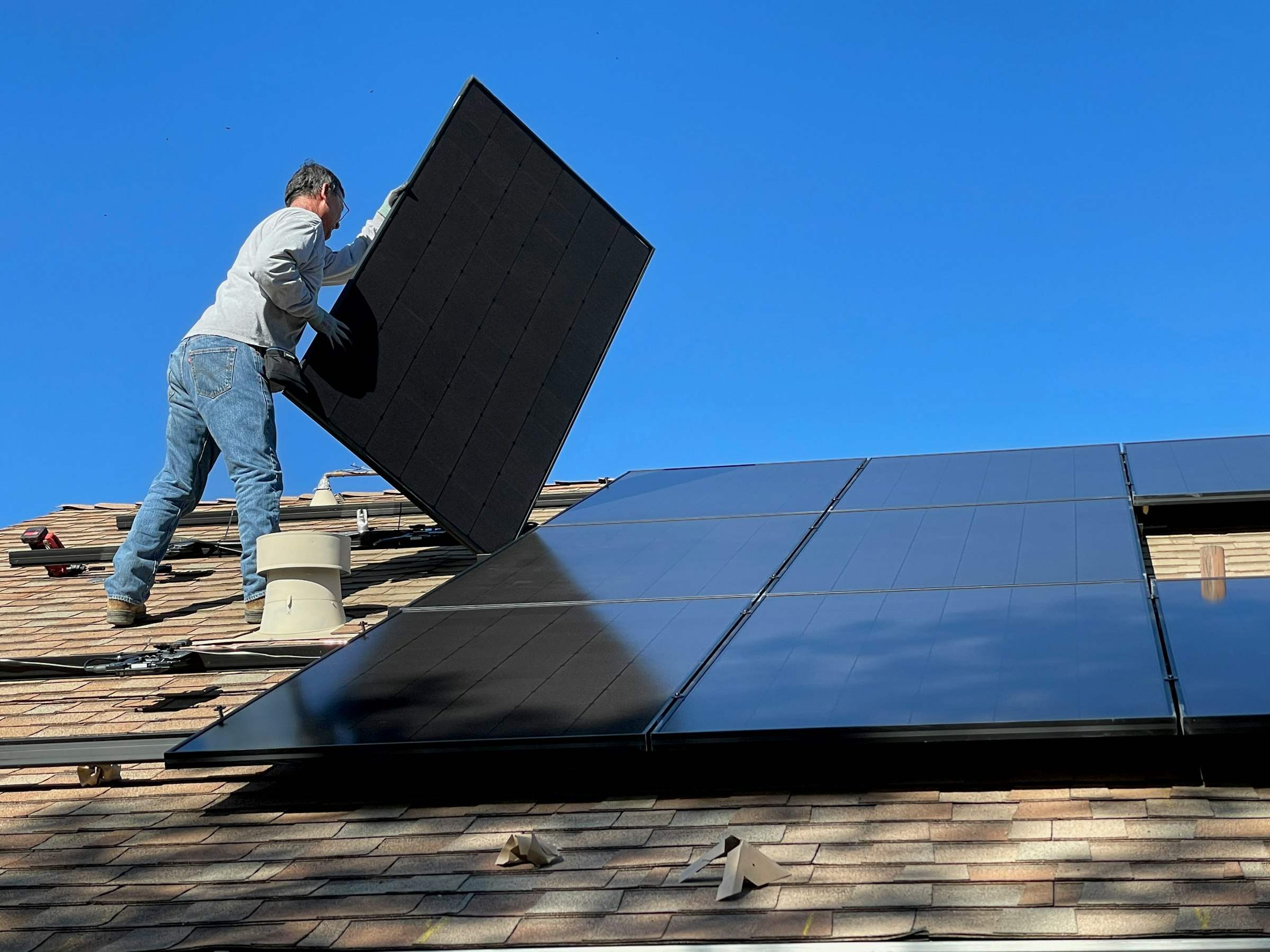
Solar PV, inverter and battery
- Full service
- Every year
- Panel cleaning
- When the yield drops
What decides it
Dust and shade. A panel under a layer of Highveld dust in winter can lose a serious fraction of its output, and nothing on the inverter display will tell you why.
Between services
Read the yield, not the lights. A system that is quietly producing less than it did last summer is telling you something, and the month to notice is not the one where the panels are under dust.
What a service covers
- Panel surfaces, mountings and any new shading from growth
- DC and AC isolators, and the surge protection
- Connection torque and signs of heat at terminals
- Inverter firmware, settings and error history
- Battery state of health, not just state of charge
Panels outlive everything else. The inverter and the battery are the parts with a service life, and the battery's is measured in cycles rather than years.
Gate and garage motor
- Full service
- Every year
- Backup battery
- Replace at 2 to 3 years
What decides it
The backup battery. It is the single most common reason a motor stops, it fails quietly, and nobody finds out until the power goes off and the gate will not move.
Between services
Once a month, close the gate on a soft obstacle and check it reverses. A motor whose anti-crush has drifted is a safety problem long before it is a service problem.
What a service covers
- Backup battery, under load rather than at rest
- Track, rollers, hinges and the gate's own alignment
- Limit settings and the anti-crush force
- Safety beams, aligned and actually triggering
- Earthing, and water ingress at the housing
A good motor runs for many years. The battery inside it rarely lasts beyond two or three.
Air conditioning
- Full service
- Every year
- Filters
- Every 1 to 3 months
What decides it
Air quality and running hours. A unit in a dusty room running most of the day needs its filters more often than the manual's number, and a blocked filter is the cause of most of the complaints that bring a technician out.
Between services
Clean the filters. It is ten minutes, it is the difference between a unit that cools and one that does not, and no technician needs to be called to do it.
What a service covers
- Indoor and outdoor coils, cleaned
- Condensate drain, cleared and draining
- Refrigerant pressures and superheat, read rather than guessed
- Electrical connections and capacitor condition
- Airflow and temperature split across the coil
Topping up the gas is not maintenance. A sealed system does not consume refrigerant, so a unit that is low has a leak, and refilling it without finding the leak is paying twice for the same fault.
Pool pump and filter
- Full service
- Each season
- Filter media
- Every 3 to 5 years
What decides it
Run hours and water chemistry. A pump running eight hours a day through a Highveld summer does a year of work in a season, and water that is out of balance works on the seals.
Between services
Empty the basket weekly and watch the filter pressure. A pressure that has climbed is a filter asking to be backwashed; one that has climbed and stayed up after a backwash is media that is finished.
What a service covers
- Pump basket, impeller and mechanical seal
- Filter media condition and the backwash valve
- Pressure at the filter, against what it read when it was new
- Timer settings against the season
- Bonding and the electrical connection at the pump
Seals and bearings are the usual failures, and both give warning by sound before they give it by stopping.
Borehole pump and pressure system
- Full service
- Every year
- Water test
- At least yearly
What decides it
Water level and water quality. Both move with the season and with how much the area is drawing, and a pump that is cycling more than it used to is usually the first sign.
Between services
Count the cycles. A pump that starts and stops rapidly is running on a pressure tank that has lost its charge, and it will destroy itself doing it.
What a service covers
- Pressure tank precharge, measured with the system drained
- Pump cycling frequency and run time
- Water level and yield against the original test
- Control box, cabling and earth leakage
- Water quality, which changes without announcing itself
A submersible pump pulled early and serviced is cheap. One that has run itself to failure takes a rig to recover.
The other half
A service nobody recorded is a service nobody can prove
Intervals are the easy part. What catches people out is the date, years later, when somebody asks for it.
A warranty claim asks for dates
Most manufacturer warranties attach conditions about installation and servicing. When something fails in year four, the question is not whether you serviced it but whether you can show that you did, and a verbal assurance is not evidence.
The next person has no idea
A new owner, a new tenant or a different contractor arrives with no history at all. Without a record they either skip a service that was due or repeat one that was done last month, and both cost somebody money.
Intervals only work if somebody counts
An annual service is an intention until a date exists somewhere that is not a person's memory. The units that actually get serviced on time are the ones where something other than the owner is keeping track.
Where InstallPass comes into this
The installer sets the service interval when they register the unit, and from then on the date is kept by the tag rather than by anybody's memory. The owner scans it and sees when the last service was and when the next one is due. The reminder goes out on its own, in the installer's name, with a link the owner can book from.
FAQ
Questions people actually ask
From the blog
More on servicing and maintenance

How often should a geyser be serviced in South Africa?
There's no single answer, but there are sensible starting points. Typical geyser service intervals, what a service covers and why water quality matters.

Solar inverter and battery maintenance checklist for installers
A site-visit checklist for servicing hybrid inverters, lithium batteries and PV arrays, with typical intervals and what to record every time.

Gate motor maintenance: what to check before the rainy season
Lightning, water and ants are hard on gate motors. A pre-season checklist for installers, timed for summer-rainfall areas and the Western Cape.
In their words
What installers say about it
The same story in every trade: a tag that stays on the unit is what brings the next job back to the person who fitted it, years after the invoice was paid.
Three geysers I fitted in 2023 came back to me this winter instead of going to whoever was cheapest on Google. The tag was still on the pipe and they scanned it.
The rating plate photo doing the typing is the part my guys actually use. Before this, half the job cards came back with the serial number missing.
A customer phoned about a warranty claim from two years ago. I had the certificate of compliance and the install date on screen before she finished the sentence.
Let the unit remember when it is due.
Set the interval once when you register the install, and the reminder goes out in your name for as long as the tag is on the wall. Fourteen days free, no card needed.
No card needed · 10 free self-print tags